

I’ve been watching The History of Tom Jones – it is hilarious – a pantomime for grown-ups. It reminds me of Austen’s juvenilia – definitely worth watching.
I’ll post again when I have watched it all.
I’ve been watching The History of Tom Jones – it is hilarious – a pantomime for grown-ups. It reminds me of Austen’s juvenilia – definitely worth watching.
I’ll post again when I have watched it all.
Filed under Adaptations, Contemporary Authors
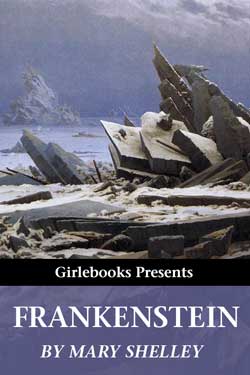
We’re reading gothic novels for my next Jane Austen meeting. I picked Frankenstein – I was hoping it would be easier to read that The Mysteries of Udolpho. At least I managed to read Frankenstein. Although, given that Austen died in 1817 and this was published in 1818 there is no chance she read it.
I struggled with it, but I did manage to finish it. I can appreciate how ground breaking it was (it is one of the first science fiction novels) and the story behind its composition (written while on holiday in Italy with Shelley and Byron), but still I had to force myself to read it. Check out Wikipedia for more information.
The story was full of violence, blood, gore and mayhem, but it is told retrospectively in a series of letters, which lessons the dramatic effect. The language is very 19th Century, for example
You will rejoice to hear that no disaster has accompanied the commencement of an enterprise which you have regarded with such evil forebodings.
and
But this was a luxury of sensation that could not endure; I became fatigued with excess of bodily exertion and sank on the damp grass in the sick impotence of despair.
The latter from the monster who has only just learned to talk.
I’m glad that I read this, but I won’t be reading it again!
Here is an article about an Frankenstein app and here is a review.
Filed under Contemporary Authors
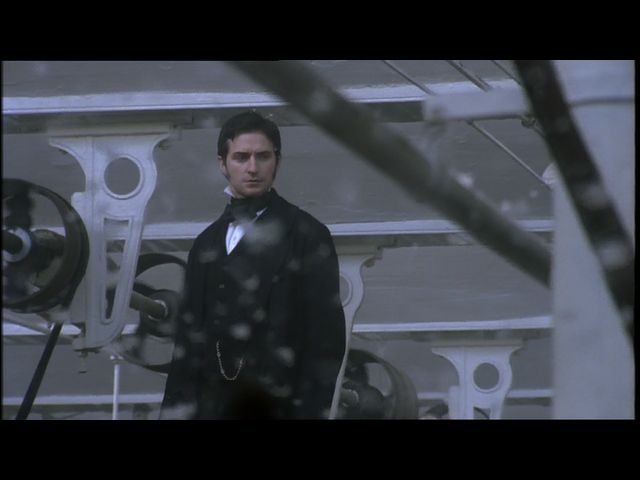
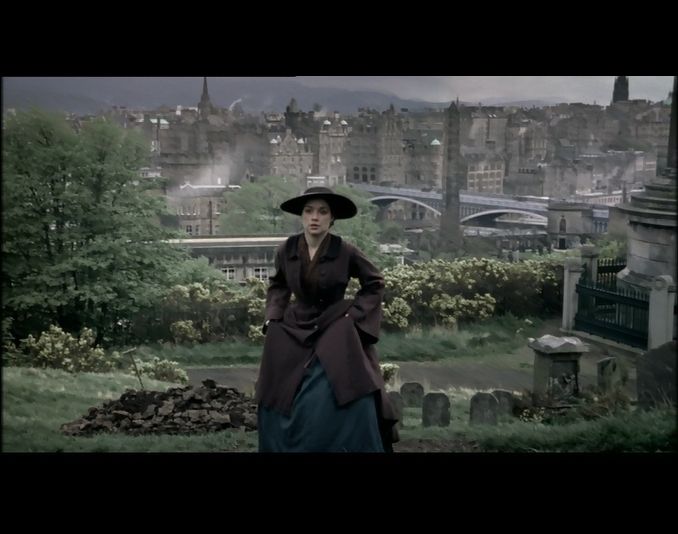
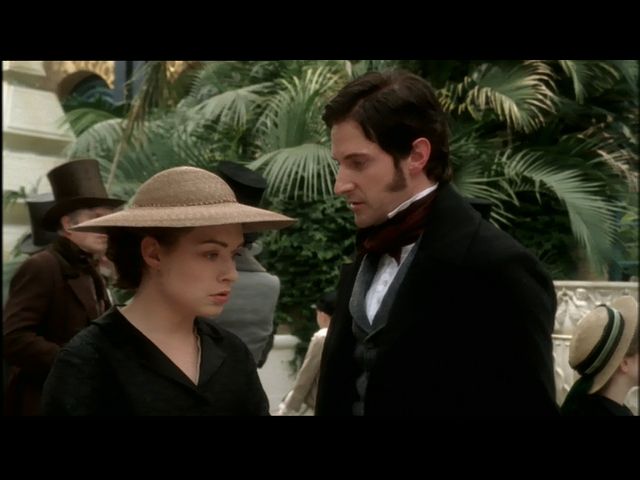
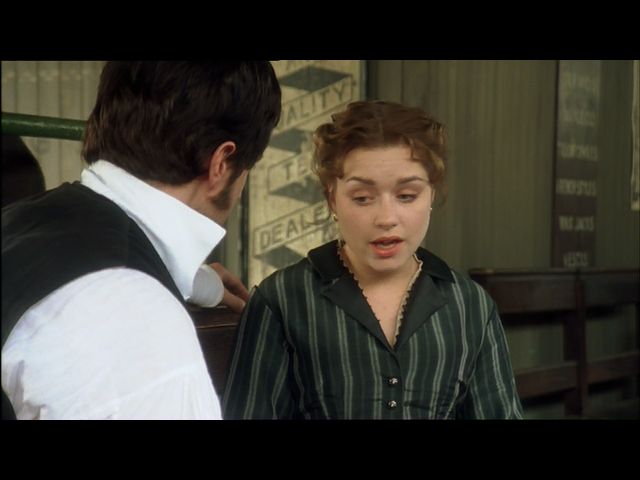
I thought I would provide images from the BBC adaptation of North and South.
Everything about this adaptation was well done and I think it probably has the best ending ever.
It doesn’t stick rigidly to the novel, but remains true to the spirit of the story.

Filed under Adaptations, Contemporary Authors
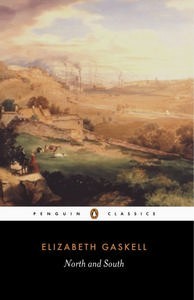
I know this is a Jane Austen blog, but I am sure I can find a connection between Gaskell and Austen. At the very least Sandy Welch wrote the screen play for the BBC adaptations of North and South and Emma (the one with Romola Garai as Emma) and North and South seems to echo Pride and Prejudice. I like to describe it as a gritty Pride and Predjudice.
Here is the plot summary from Wikipedia
When because of frustratingly unspecified theological doubts–we assume he becomes a Unitarian, like Gaskell’s husband–the Rev. Mr. Hale throws up his living as a Church of England priest, he, his wife, and their daughter Margaret leave the idyllic village of Helstone, in Hampshire, and move to Milton (i.e., Manchester). For most of her youth Margaret, now eighteen or nineteen, has been brought up in London by her wealthy Aunt Shaw, and has rejoined her parents only after the marriage of her vivacious but shallow cousin Edith to Captain Lennox. The captain’s brother Henry, a rising barrister, asks for Margaret’s hand but, regarding him as friend not lover, she respectfully sends him packing.
Settling in smoky Milton, the Hale women are troubled by urban dirt and commercial go-getting. The “Dissenter” Mr. Hale, who has a very small independence, now works as a tutor. His favourite pupil is the important manufacturer, Mr. Thornton. Staying to tea, Thornton debates with–and really instructs–the naive, “humanistic” Hales about the condition of working class, the strikes, the owners–the realities of the marketplace. Margaret sees Thornton as coarse and unfeeling, but also as admirable in the way he’s made his way up from poverty. He sees her as haughty, but also as lovely and intelligent.
Margaret begins to warm up to Milton when she befriends Nicholas Higgins, a factory worker, and his consumptive daughter Bessy, who is about Margaret’s age. She visits the family as often as she can, but her own mother is becoming seriously ill, too. Bessy and Mrs. Hale will soon die.
Although Thornton has tried to get his mother to like and visit the Hales, there is no love lost between them. Mrs. Thornton sees Margaret as even haughtier than her son, toward whom she herself feels exceptionally possessive. When striking workers, now a mob, threaten violence on Thornton and his factory–he has brought in cheap Irish workers to break the strike–Margaret encourages him to go down and appease the mob until soldiers arrive to keep the peace. He does so, but is in great danger. She puts herself herself between Thornton and the mob, and is struck by a hurled stone. The soldiers arrive, the rioters disperse, and Thornton carries Margaret indoors.
Thornton asks her to marry; she declines–insisting that she would have intervened to save any man threatened by a mob. It was nothing personal. When Mrs. Thornton learns that her bold Northern son has been rejected by this young Southern “lady,” she hates her all the more. When the dying Mrs. Hale asks Mrs. Thornton to look after Margaret, that woman slyly promises only to chastise Margaret if she is about to make a mistake.
Meanwhile, Margaret’s brother Frederick, who is wanted for his part in a justified-but-still-illegal mutiny, secretly visits their dying mother. When Margaret takes him to the train station on his way to London, Thornton sees them and–a long-lasting mistake–supposes Frederick to be Margaret’s lover. To complicate things further, on the train platform a certain no-good called Leonards, who served with Frederick but did not mutiny and who now wants to hand him in to get a reward, sees him and makes to hand him in. Frederick pushes him over the platform a few feet onto the tracks, then jumps into the train. Leonards dies shortly after. When Margaret is questioned by the police about the scuffle on the platform, she lies, saying she wasn’t there. As the magistrate overseeing the investigation into Leonards’s death, Thornton knows of Margaret’s lie but, though not understanding what’s behind it, covers up for her. In the course of all this, Margaret begins to realize that she loves him.
Bessy dies. Her father Nicholas gets a job with Thornton, who, mainly to avoid seeing Margaret, has stopped his tutorials with Mr. Hale. In the meantime, Mr. Bell, Thornton’s landlord and an old friend from Oxford, comes to visit the Hales in Milton, and Hale repays the visit by going to Bell in Oxford. There, suddenly, he dies. Margaret and Frederick are now orphans.
Aunt Shaw and Captain Lennox are summoned to take Margaret back to London, where she will lead an easy life with Edith and her children. Shortly after a visit with Margaret to Helstone, Bell also dies–it’s the last of the story’s many fatalities–leaving his considerable property to Margaret.
Thornton meanwhile has suffered grave financial losses: the market fluctuates, and his timing, and luck, have been bad. He comes to London to confer with the lawyer Lennox about his next move. Too, he has found out from Higgins that Margaret had been protecting her brother Frederick, who is now safe back in Spain with his Spanish wife. Margaret didn’t have a “lover” after all.
Finally alone together, Thornton and she can admit their love for one another. This is good, it must be said, for his business, which with the influx of her capital can get back on its feet.
I found this novel very compelling much better than Mary Barton. Gaskell has a much lighter touch in this one. She is still concerned with the plight of the poor, the lack of communication between the workers and the masters and the moral issues of being a good person. The romance between Margaret and Mr Thornton is deftly handled (very like Darcy and Elizabeth Bennet) but unlike Austen we have Mr Thornton’s point of view as well. Margaret’s family are very disappointing. They all seem so self-involved. Mr Hale has a crisis of conscious and can longer be a clergyman, which involves uprooting his family and placing them in economic hard ship. Mrs Hale just seems to spend her time complaining – she married beneath her and like the first Mrs Weston …
She had resolution enough to pursue her own will in spite of her brother, but not enough to refrain from unreasonable regrets at that brother’s unreasonable anger, nor from missing the luxuries of her former home. They lived beyond their income, but still it was nothing in comparison of Enscombe: she did not cease to love her husband, but she wanted at once to be the wife of Captain Weston, and Miss Churchill of Enscombe.
Aunt Shaw and Cousin Emily are just vacuous – seeking only pleasure and to display their wealth.
Margaret’s character doesn’t change much, but she does realise that she has misjudged the people of the north (in particular Mr Thornton who at first she considers to be a tradesman and therefore beneath her and by the end she appreciates his innate gentleman like qualities – one might even say she is blinded by her prejudice!).
I think Austen fans will appreciate this novel – the prose style is completely different, but the themes are similar.
Also the BBC adaptation (with Richard Armitage as Mr Thornton) is fabulous.
More reviews …
http://janeausteninvermont.wordpress.com/2009/05/14/book-review-north-and-south-by-elizabeth-gaskell-with-special-thanks-to-richard-armitage/ (look I’m not the only Austen fan also enjoying Gaskell!).
http://girlebooks.com/blog/free-ebooks/north-and-south-by-elizabeth-gaskell/ (I read this version on my Kindle).
http://gaskellblog.wordpress.com/2011/01/27/comparing-pride-prejudice-with-north-south-theme-social-prejudice-part-1/ (A whole post comparing Pride and Prejudice and North and South)
http://slightfoxing.blogspot.com/2011/01/north-and-south-elizabeth-gaskell.html
Filed under Contemporary Authors

As Austen was a bit of an Edgeworth fan, when I saw this in the book shop I decided I had to read it (although Austen died before this novel was published).
Here’s the stuff on the back …
She was the best-selling author of Regency England. Admired by Jane Austen, whose fame she eclipsed. John Ruskin declared her books ‘the most re-readable in existence’.
On the death of her guardian, honest, generous-spirited Helen Stanley is urged to share the home of her childhood friend Lady Cecilia. But this charming socialite is withholding secrets and Helen is drawn into a web of white lies and evasions that threaten not only her hopes for marriage but her very place in society.
A fascinating panorama of Britain’s political and intellectual elite in the early 1800s and a gripping romantic drama, Helen was the inspiration for Elizabeth Gaskell’s Wives and Daughters.
Edgeworth lacks the wit and light touch of Austen. I found this novel heavy going and I suspect it won’t appeal to a modern audience. It is about lying and liars. General Clarenden, Cecilia’s husband, declares he would not marry a woman who had been in love previously. Cecilia lied to him about a previous infatuation. Some letters, that Cecilia wrote to this man, come to light and Cecilia encourages Helen to say that the writing on the letters isn’t Cecilia’s (the implication being that it is Helen’s). Things then get worse – the letters might get published, Helen becomes the scandal of the moment.
I’ve picked a few bits out that remind me of Austen …
[…] and secondly, because every woman is willing to believe what she wishes.
and this is a bit like the part in Emma when the narrator talks about English verdure.
The road led them into the next village, one of the prettiest of that sort of scattered English villages, where each habitation seems to have been suited to the fancy as well as to the convenience of each proprietor; giving an idea at once of comfort and liberty, such as can be seen only in England. Happy England, how blest, would she but no her bliss!
It is beautifully written, romantic and full of suspense – will Cecilia ever confess to the General and what will happen to Helen? If you are a Jane Austen fan or enjoy regency romances, then you should try to read this one if only for the authentic period detail.
Here are some other reviews …
http://vulpeslibris.wordpress.com/2008/03/02/maria-edgeworth-helen/
http://www.guardian.co.uk/books/2010/jul/03/maria-edgeworth-helen-john-mullan
Filed under Contemporary Authors, Recommended
On second thoughts I shall just direct you to a marvellous post by Ellen Moody here – I think she has written everything I wanted to write (and more) much better than I could.
Filed under Contemporary Authors, mansfield park
I’ve been reading Lovers Vows. I downloaded it as an e-book from here. Definitely worth a read (and surprisingly easy to read). There are parallel between the plot of Mansfield Park and Lovers Vows.
I’ll try to write more on this in another post.
Filed under Contemporary Authors, mansfield park
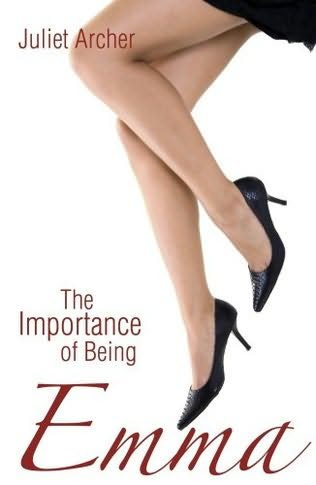
I bought this book based on the review in the Jane Austen Regency World magazine – they were very favourable. Just by looking at the cover I should have known better.
Filed under Contemporary Authors, Dreadful

I was pleasantly surprised by this novel – it’s very readable (unlike some of Fanny Burney’s work).
Here’s what’s on the back …
Maria Edgeworth’s sparkling satire about the Anglo-Irish family of an absentee landlord is also a landmark novel of morality and social realism.
The Absenteecentres around Lord and Lady Clonbrony, a couple more concerned with London society than their duties and responsibilities to those who live and work on their Irish estates. Recognising this negligence, their son Lord Colambre goes incognito to Ireland to observe the situation and trace the origins of his beloved cousin Grace. To put matters straight he finds a solution that will bring prosperity and contentment to every level of society, including his own family.
Although the time period and the phraseology is very similar to Austen, this novel lacks the sparkling wit and is very didactic – I occasionally felt I was being beaten over the head with the message.
But it is worth reading for the social history. Also I think it’s a good thing to read things Austen read and to realise how extraordinarliy talented she was (i.e in comparison with the predecessors).
 I’ve had this book in my ‘to be read’ pile for quite some time. I thought the Everything Austen Challenge would be a good opportunity to force me to read it.
At the moment I’m about a third of the way through and I have to admit that I like it. Edgeworth has none of Austen’s wit, but her phraseology is eerily similar. I will write a proper review later.